
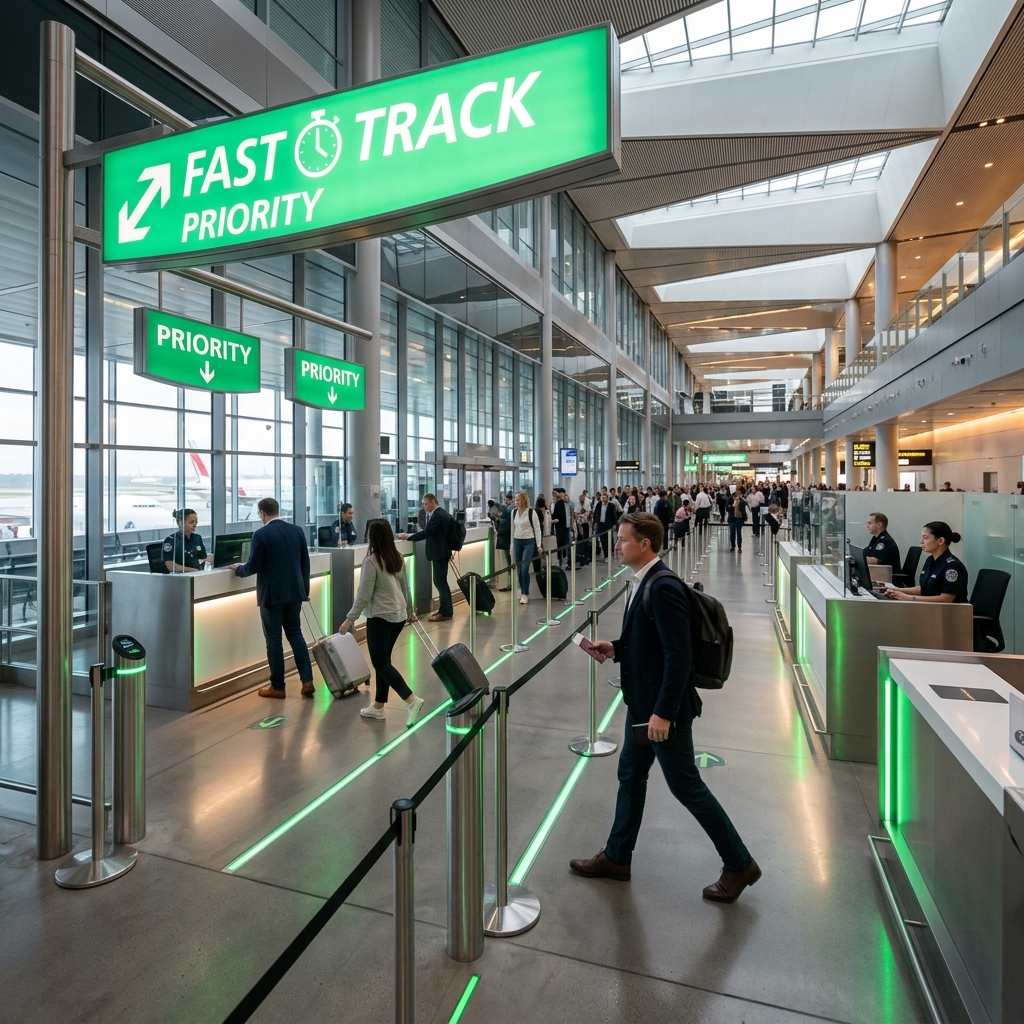
Why Some Applicants Get Approved Faster Than Others
The disparity in visa processing times among UAE residents submitting applications to the same consulate, during the same period, for the same destination, is one of the most perplexing phenomena in international travel. One applicant receives their passport back with a fresh visa within four days. Another, seemingly equally qualified, waits three weeks. A third faces a month-long silence before finally receiving a decision. This inconsistency is not random. It is the predictable outcome of how modern consular processing systems prioritize, escalate, and resolve applications based on the specific risk characteristics of each individual file.
Understanding the mechanics behind processing speed allows applicants to strategically position their files for faster resolution. While no applicant can guarantee expedited processing, reducing the friction points that cause delays and presenting a file that requires minimal additional investigation dramatically increases the probability of a swift, affirmative decision. The fastest approvals consistently share common characteristics that collectively signal to the processing system that the file is low-risk, complete, and requires no further action.
The Automated Triage Layer
Before a human officer reviews any application, the submitted data passes through automated screening algorithms. These systems instantly cross-reference the applicant's biographical data against security databases, immigration records, and risk models. Applicants who clear this automated triage without triggering any flags proceed directly to the human assessment queue. Those who trigger partial matches, security holds, or demographic risk indicators are diverted to secondary processing queues that inherently require additional time. The speed of the automated clearance is the single most significant determinant of overall processing speed, yet it is entirely invisible to the applicant.
The Completeness Premium
Applications that arrive at the consulate in a state of absolute documentary completeness are processed significantly faster than those requiring follow-up. When an officer opens a file and finds every required document present, properly formatted, internally consistent, and logically coherent, they can proceed directly to the assessment phase. If a single document is missing, incorrectly formatted, or contradicts another element, the file enters a pending queue while the officer decides whether to request supplementary evidence or proceed to refusal. This pending state adds days or weeks to the timeline. The premium for completeness is not merely procedural; it actively accelerates the decision.
The Power of Familiar Profiles
Applicants who have previously been issued visas by the same consulate enjoy a processing advantage that first-time applicants cannot access. The consulate's internal database retains records of prior applications, decisions, and compliance outcomes. When a returning applicant's file is opened, the officer can immediately reference a history of compliant travel, prior financial assessments, and previously verified employment details. This institutional memory reduces the investigative burden on the officer, allowing them to focus solely on whether the current circumstances remain consistent with the established pattern. Repeat applicants with clean histories are routinely processed in minimal time.
Financial Clarity Accelerates Decisions
Bank statements that tell a clear, unambiguous financial story require minimal officer analysis time. When the monthly salary credit matches the employment letter exactly, the balance trajectory shows steady growth, and no unexplained large transactions demand investigation, the officer can complete the financial assessment within minutes. Conversely, a statement containing multiple unexplained deposits, frequent large cash withdrawals, or a balance that fluctuates dramatically requires forensic analysis. This analysis is time-consuming by nature and often necessitates consultation with a senior officer, further extending the timeline.
Employment Verification Speed
When a consulate initiates employment verification by contacting the applicant's employer, the response time depends entirely on the company's HR department. Large multinational corporations with dedicated visa support teams typically respond to consular inquiries within 24 to 48 hours. Small companies or those without established HR processes may take a week or more to respond, or may not respond at all, leaving the consulate in a verification limbo. Applicants can proactively mitigate this delay by alerting their HR department before submission that a consular verification request may arrive, ensuring they are prepared to respond promptly.
Nationality and Security Screening Dynamics
It is an operational reality that certain nationalities require mandatory enhanced security screenings that automatically extend processing times. These screenings involve coordination between the consulate and central immigration authorities, and sometimes with allied intelligence services. The duration of these screening processes is fixed and cannot be accelerated by any action of the applicant. Applicants from nationalities subject to these protocols should always build additional buffer time into their travel planning and expectations.
The Cover Letter's Processing Impact
A strategically drafted cover letter that proactively addresses potential officer concerns eliminates the cognitive deliberation time that otherwise extends processing. If the officer opens the file, reads the cover letter, and finds that every question they would have asked has already been answered with clarity, they can proceed to a decision immediately. A missing or generic cover letter forces the officer to independently investigate each potential concern, a process that is inherently slower and more prone to resulting in requests for additional documentation.
Practical Actions to Maximize Processing Speed
Applicants seeking the fastest possible processing should ensure absolute documentary completeness, submit during off-peak periods when consular workloads are lighter, maintain financial records that require zero additional investigation, alert their employer's HR department to anticipate verification requests, and craft a cover letter that preemptively resolves potential concerns. These actions collectively position the file to pass through every stage of the processing pipeline without interruption, minimizing the elapsed time between submission and decision.
How Patriot Pro Travel & Tourism Approaches Applications
Risk assessment: We conduct a thorough audit of your profile to identify vulnerabilities before they reach a consular officer.
Profile positioning: We ensure your professional standing and financial footprint are presented in the most compelling light possible.
Document alignment: We cross-verify every certificate, statement, and itinerary to eliminate contradictions that trigger refusals.
Strategy planning: We guide you on the optimal embassy, timeline, and approach tailored to your specific circumstances.
Reducing refusals: By preemptively addressing common consular concerns, we systematically lower the probability of rejection.
Our methodology is built on precision, deep consular insight, and an unwavering commitment to our clients' global mobility. We handle the complexity so you can travel with confidence.