
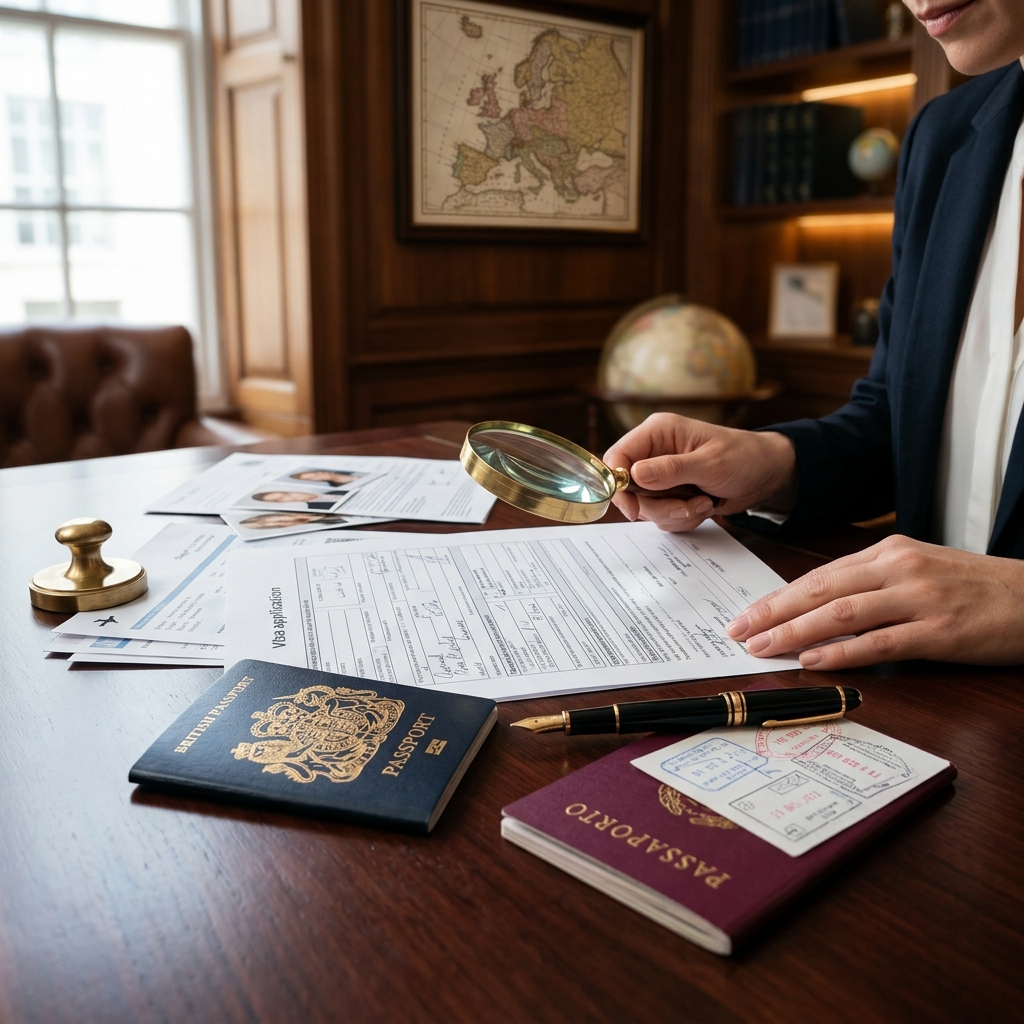
Common Mistakes That Delay Urgent Visa Appointments From the UAE
An urgent visa request usually starts the same way in Dubai or Abu Dhabi: a confirmed flight, a non-refundable hotel booking, and a five-day window to secure an embassy or visa centre appointment that may already be full for the next three weeks. By the time most applicants realise how tight the timeline is, several of the easiest mistakes have already been made. This piece looks at the patterns that repeat across Schengen and non-Schengen applications alike, from France and Italy to the United Kingdom, the United States, and Canada, and at what actually causes appointment delays for residents applying from the UAE.
Treating "Urgent" as a Visa Category Instead of a Time Constraint
Few consulates offer a formal expedited track, and the ones that do typically reserve it for documented emergencies such as a death in the family, urgent medical treatment, or a confirmed business obligation with supporting letters. Applicants under deadline pressure sometimes assume that paying more or asking nicely will move them up the queue. In practice, urgency without supporting documentation rarely changes anything. The appointment system runs on available slots, and slots are released according to each consulate's own schedule, not according to how soon the applicant intends to travel.
Submitting a Document Set Built for the Wrong Country
A recurring issue among UAE residents who travel frequently is reusing a document pack from a previous Schengen or UK application without adjusting it for the new destination. Bank statement formats, proof-of-funds thresholds, accommodation evidence, and even photo specifications differ between, for example, the German and French visa centres, despite both falling under the Schengen umbrella. Non-Schengen destinations add further variation: the US and UK have their own interview and biometric structures, while countries such as Saudi Arabia for Umrah travel or Australia for tourist entry apply rules that have little overlap with European requirements. When a document set is assembled quickly and based on assumption rather than the specific consulate's current checklist, the appointment is often booked but the file is incomplete, which pushes the real processing timeline back regardless of how early the slot was secured.
Relying on Agents Who Promise Guaranteed Slots
The promise of a guaranteed appointment within 24 to 48 hours is one of the most common red flags in the UAE visa services market. Embassy and visa centre booking systems are managed directly by the consulates or their authorised outsourcing partners, such as VFS Global or TLScontact, and no third party controls slot availability outright. Some unofficial agents use bulk-booking scripts or hold blocks of appointments and resell them at inflated prices, which can leave an applicant paying twice: once for the inflated slot, and again in lost time if the booking is later cancelled or flagged. A more reliable approach is working with a licensed travel and visa services provider that can advise on realistic timelines and legitimate booking channels, rather than one that frames the appointment itself as something for sale.
Ignoring Consulate-Specific Rules That Are Easy to Miss
Each consulate publishes its own operating rules, and these rules change without much public notice. Some Schengen missions require the applicant to apply from their country of legal residence only, which matters for the large share of UAE residents who hold passports from a third country. Others require a minimum number of blank passport pages, a specific validity period beyond the travel dates, or biometric data that has not already been captured within the past 59 months. A mistake that comes up often with first-time Schengen applicants is booking an appointment at the wrong consulate altogether, when the rule for that trip required applying through the country where the traveller would spend the most nights. These details rarely cause problems for travellers who plan early, but under time pressure they are the first things to be overlooked.
Booking Too Close to the Intended Travel Date
Processing time and appointment availability are two separate constraints, and conflating them is a frequent source of delay. A Schengen visa may state a standard processing window of around 15 working days, but that clock only starts once the application is lodged, not from the date the appointment is requested. If the nearest available slot is two weeks out, the realistic completion date is closer to a month from the moment the applicant starts looking. The same logic applies to UK, US, and Canadian visas, where appointment backlogs at certain times of year, particularly during the summer travel season and around major holidays, extend timelines well beyond the published processing estimate. Booking with only the visa's stated processing time in mind, and not the separate wait for an appointment slot, is one of the most consistent planning errors among UAE-based applicants.
Underestimating How Nationality and Residency Status Affect Timing
The UAE is home to residents from well over a hundred nationalities, and visa pathways are not uniform across them. An applicant's passport, not just their UAE residence visa, determines which consulate handles the case, what supporting documents are expected, and in some instances whether an additional referral or security check applies before an appointment can even be confirmed. Two colleagues applying for the same Schengen country from the same Dubai office may face different timelines purely because of differing nationalities. Travellers sometimes plan a trip around a colleague's or friend's experience without accounting for this variation, then are surprised when their own application takes longer to schedule or process.
Applying for the Wrong Visa Type to Save Time
Under deadline pressure, some applicants select a visa category that seems faster rather than the one that matches the actual purpose of travel, assuming a tourist visa will move quicker than a business visa, for instance, or that a transit visa will substitute for a short visit. This rarely saves time. Mismatched applications are more likely to face requests for additional documentation or clarification, which interrupts the timeline rather than shortening it. Choosing the correct category from the outset, even if it requires slightly more paperwork, is generally the faster route for urgent travel.
Leaving Umrah and Group Travel Bookings Until the Last Minute
Outside the Schengen and Western visa contexts, Umrah travel from the UAE carries its own appointment and processing rhythm, particularly during periods of high demand such as Ramadan and school holidays. Visa issuance for Umrah is tied closely to group registration and accommodation confirmation in Makkah and Madinah, so a late booking does not just risk a delayed visa, it risks losing the accommodation and transport allocation the visa depends on. Applicants who treat Umrah visa processing as a same-week formality, rather than as part of a coordinated package booking, are the ones most likely to find their travel dates unworkable once the paperwork catches up.
Working Backward From the Travel Date Instead of Forward From the Application
The applicants who consistently secure appointments without last-minute strain are the ones who plan from the application forward rather than from the flight backward. That means checking the relevant consulate's current appointment availability before booking flights or non-refundable accommodation, confirming the document checklist specific to that mission rather than a general template, and building in a buffer for the gap between appointment booking and the start of formal processing. None of this guarantees a particular outcome, since each application is assessed individually by the consulate or embassy concerned, but it removes most of the avoidable delay that applicants create for themselves.
How Patriot Pro Travel & Tourism Helps
When an appointment timeline is tight, the difference between a smooth submission and a missed slot usually comes down to preparation, which is where our team steps in.
We review the applicant's nationality, residency status, and travel purpose to identify which consulate process and appointment route genuinely applies before any booking is made.
We check each document against the current checklist for the specific country and visa category, rather than a generic or outdated list.
We help applicants choose the correct visa type and service for their actual travel plans, including business, tourist, and Umrah pathways.
We flag the common timing and documentation mistakes that lead to rejected or delayed appointments before they happen.
We work to strengthen the overall application file so it holds up to consulate scrutiny rather than just filling a slot.
We coordinate travel dates, bookings, and packages around realistic processing and appointment timelines instead of around hope.
Patriot Pro Travel & Tourism has supported UAE residents of many nationalities through visa applications across Schengen and non-Schengen destinations, as well as Umrah and holiday travel. Our role is to bring structure and accuracy to a process that punishes guesswork, not to shortcut it. For travel under time pressure, that preparation is what actually protects the trip.