
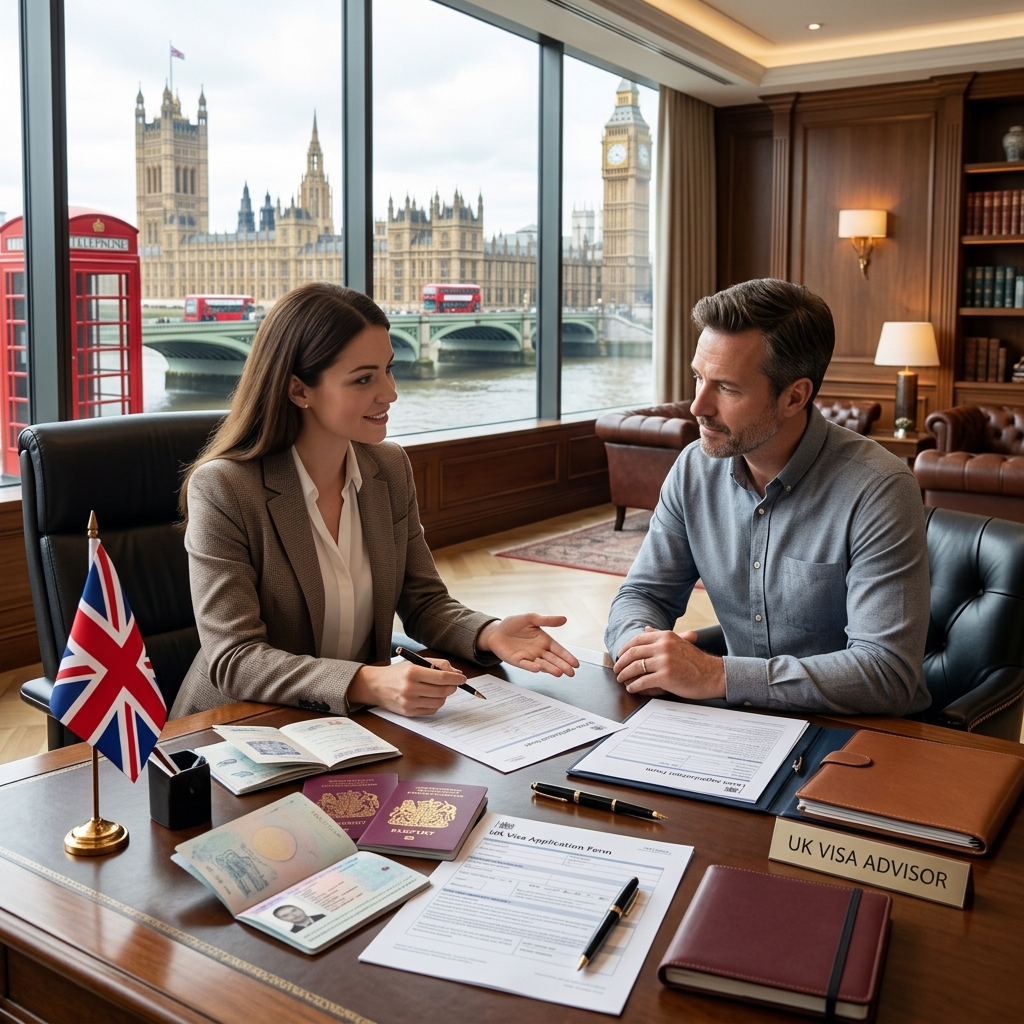
UK Visa From the UAE: Appointment Availability and Priority Service Options
Applicants booking through UKVCAS in Dubai or Abu Dhabi this summer are noticing something that often catches first-time applicants off guard: the visa decision itself may take only a few days once biometrics are submitted, but securing the appointment to submit those biometrics can take far longer. Between June and September, when school holidays and Eid travel overlap with peak visa demand across the UAE, open slots at UK visa application centres become scarce, and applicants who wait until a few weeks before departure often find themselves with limited or no convenient options. Understanding how the appointment system actually works, and where priority services can and cannot help, makes a meaningful difference in how smoothly the process goes.
How UKVCAS Appointments Work in the UAE
UK visa applications from the UAE are submitted online and then finalised in person at a UK Visa and Citizenship Application Services (UKVCAS) centre, operated locally by VFS Global, with locations in Dubai and Abu Dhabi. After completing the online application form and paying the visa fee, applicants are directed to a separate booking portal to reserve a date and time for biometric enrolment and document submission. This second step is where most delays originate, because appointment slots are released on a rolling basis and do not always match the volume of applicants trying to book them. A confirmed visa application does not guarantee an appointment within any particular window, which is why timing the application well ahead of travel matters more than many applicants expect.
Standard Processing Versus Priority and Super Priority
Once biometrics have been submitted, the UK Home Office targets a decision within fifteen working days for standard visit visa applications, though this is an estimate rather than a fixed deadline, and processing can extend beyond that during busy periods. Two paid add-on services exist for applicants who need a faster outcome: the priority service, which aims to deliver a decision within five working days, and the super priority service, which aims to deliver a decision by the end of the next working day after biometrics are enrolled. Both come at an additional cost on top of the standard visa fee, and both are subject to availability rather than automatic eligibility. It is worth being precise about what these services speed up: they affect how quickly a decision is issued after the appointment, not how quickly an appointment slot can be found in the first place. An applicant can pay for super priority and still face a multi-week wait if no UKVCAS appointment is available before that date.
What to Prepare Before Booking an Appointment
Most delays at the appointment stage trace back to incomplete preparation rather than the booking system itself. Before selecting a date, applicants should have the following ready in digital and printed form:
A valid passport with at least one blank page and reasonable validity remaining
The online application confirmation and appointment booking confirmation
A UAE residence visa copy or, for visitors, proof of legal status in the country
Bank statements covering the recent months, showing consistent income or savings
Proof of employment, such as a salary certificate or, for business owners, trade licence documents
A cover letter outlining the purpose, dates, and itinerary of the trip
Proof of accommodation and a return or onward flight reservation
Evidence of ties to the UAE, such as a tenancy contract, family registration, or ongoing employment
Document requirements vary by visa category and by the applicant's nationality and circumstances, so this list should be treated as a starting point rather than a complete checklist for every case.
Mistakes That Slow Down UK Visa Applications
A recurring issue is applicants booking their UKVCAS appointment before their supporting documents are actually finished, on the assumption that paperwork can be sorted out afterward. Bank letters, salary certificates, and trade licence translations can take days to obtain in the UAE, and arriving at the appointment with gaps in the file does not stop the clock from running on a near-term travel date. Another common error is underestimating how UAE-issued documents need to read from a UK entry clearance officer's perspective: a salary certificate without a stamp, a bank statement with unexplained large deposits, or a sponsor letter that does not match the applicant's actual relationship to the trip can all raise questions that prolong assessment. Some applicants also assume that paying for super priority guarantees a fast result regardless of file quality, which is not the case; the service affects the speed of review, not the strength of the application itself. Finally, a significant number of applicants treat the appointment booking step as an afterthought, only to discover that the date they need is no longer available once they finally log in to book.
Building a Stronger Application Before You Book
The applications that move through the system with the fewest complications tend to share a few habits. Documents are gathered and reviewed before the online form is even submitted, so the appointment booking step is not competing against a missing bank letter or an expired trade licence. The cover letter is specific about dates, purpose, and funding rather than generic, and it is consistent with everything else in the file, including the bank statements and the employment letter. Financial evidence shows a stable pattern rather than a single large deposit shortly before applying, since entry clearance officers tend to look at the trend, not just the closing balance. Where a UAE resident is travelling with family members on different passports, each application is prepared as a complete, standalone file, since a strong primary applicant does not automatically carry a weaker dependent application. None of this changes the discretion exercised by UK Visas and Immigration in reviewing a case, but it does reduce the chance that an application is delayed or queried over something that could have been addressed in advance.
Why UAE Residency Status and Nationality Affect the Process
The UAE is home to applicants from well over a hundred nationalities, and UK visa requirements are not identical across all of them. Some nationalities face additional documentary expectations or longer indicative processing windows based on Home Office guidance for that country, and these can shift over time. Just as relevant is residency status within the UAE itself: an Emirati or GCC national applying from home applies under different baseline expectations than an expatriate residing in the UAE on an employer or family sponsorship visa, who in turn applies differently than someone present in the UAE on a visit visa hoping to apply for the UK from there. UKVCAS generally expects applicants to hold valid immigration status in the country from which they are applying, so an expired or about-to-expire UAE residence visa can complicate where and how the application should be submitted. Long-term UAE residents who have built a stable financial and employment history in the country are often in a stronger position to demonstrate ties and intent to return, which is one of the central questions a UK visit visa assessment considers, but this still needs to be presented clearly and supported with documents rather than assumed.
Timing the Appointment Around Your Travel Dates
Because UKVCAS slots are released and booked on a rolling basis, and because priority services only affect the post-biometric decision timeline, the most reliable way to protect a travel date is to start the appointment booking process well before flights, hotels, or events are finalised. A practical approach is to apply and attempt to book an appointment between four and eight weeks before the intended travel date, leaving enough room to add priority or super priority service if a decision is needed urgently, while still allowing for the possibility that no upgrade is available on short notice. Applicants travelling for fixed events, such as graduations, weddings, or conferences, should treat the appointment date as the real constraint to plan around, rather than the visa decision date.
How Patriot Pro Travel & Tourism Helps
Navigating UKVCAS appointment availability and priority service decisions is easier with someone tracking the process alongside you, which is where our team comes in.
We review the applicant's UAE residency status, nationality, and travel timeline to map out a realistic appointment and booking strategy
We check supporting documents against current UK visa requirements before the UKVCAS appointment is booked, not after
We help determine whether standard processing or a priority or super priority upgrade fits the applicant's actual travel deadline
We flag common errors, such as inconsistent financial documentation or mismatched sponsor details, before they reach an entry clearance officer
We advise on how to present employment, financial, and ties-to-UAE evidence in a clear and coherent application file
We help applicants plan their appointment date and travel booking sequence so flights and accommodation are not locked in prematurely
Patriot Pro Travel & Tourism works with UAE residents of all nationalities to keep the UK visa process organised from the first document to the UKVCAS appointment itself. Our role is to remove avoidable friction from a process that already has enough variables outside anyone's control. For applicants weighing appointment timing against priority service costs, that kind of structured guidance is often the difference between a smooth submission and a rushed one.