
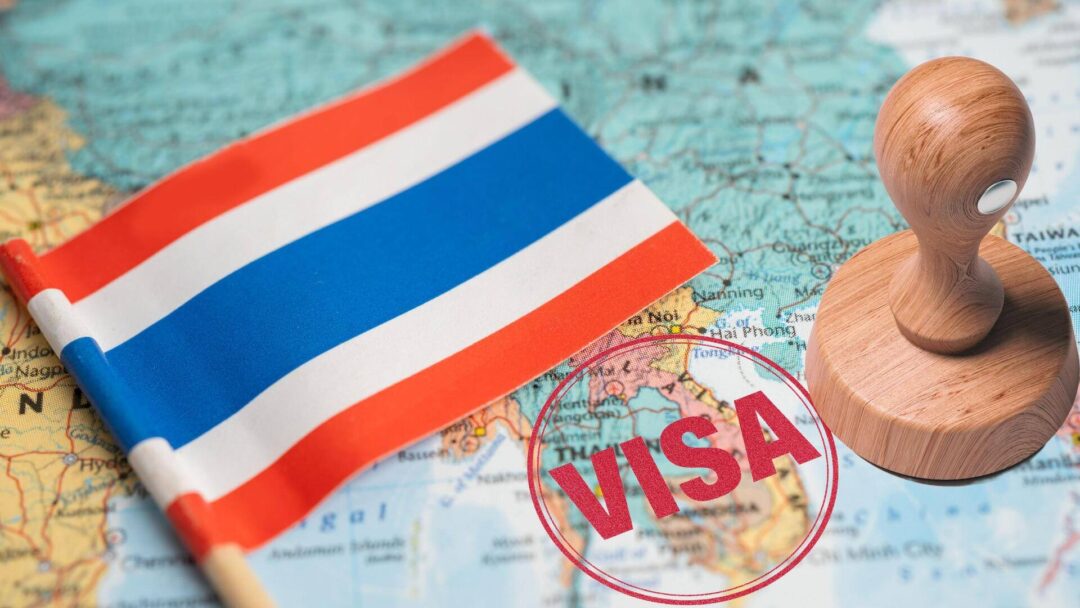
Thailand Visa for UAE Residents: Documents, Timing, and Risk Signals
Thailand remains one of the most sought-after leisure destinations for UAE residents, offering an unmatched blend of cultural immersion, tropical geography, and high-end hospitality. However, the apparent accessibility of Thailand often leads applicants into a false sense of security regarding the visa process. The Thai consulate in the UAE, while generally efficient, operates utilizing a specific set of evaluative criteria designed to prevent unauthorized extended stays and unregulated commerce. Treating a Thai visa application with the same documentary rigor applied to a Schengen or UK application is the most reliable strategy for avoiding unexpected administrative delays or direct refusals.
The core philosophy of the Thai immigration assessment revolves around verifying authentic tourism. Officers are scanning the application for signals that differentiate the genuine vacationer from individuals seeking a backdoor to long-term digital nomadism or localized employment. Consequently, a perfectly structured application is one that clearly defines a finite timeline, robust financial stability in the UAE, and an impeccable logistical framework.
Estimated Processing Time
The standard processing timeframe for a Thai Tourist Visa processed through the designated visa application centers in the UAE typically ranges between 3 to 5 working days from the date of biometric and document submission. It is critical to recognize that this timeline effectively excludes UAE localized weekends and Thai national holidays. During peak localized travel periods, particularly around the UAE winter break, processing can stretch to 7 or 10 days. Commencing the application cycle roughly three weeks prior to the intended departure offers a solid buffer against unforeseen delays.
Basic Required Documents
An original passport boasting a minimum of six months validity from the exact date of intended arrival in Thailand, alongside two blank pages.
A valid UAE residency visa, which must possess at least three months of validity beyond the scheduled return date.
A thoroughly completed Thai visa application form with zero blank critical fields.
Recent, high-quality passport-sized photographs conforming strictly to the consulate’s dimensional and background specifications.
Confirmed, round-trip flight tickets demonstrating clear entry and exit points matching the application dates.
Verifiable, comprehensive hotel bookings covering every single night of the proposed itinerary within the Kingdom.
Three months of original, stamped bank statements reflecting consistent salary deposits and a healthy closing balance.
An official No Objection Certificate (NOC) or Employment Letter from the UAE sponsor outlining the applicant's role, salary, and authorized leave.
The Nuance of Financial Capability
While Thailand is often perceived as an economical destination, the consulate demands proof of substantial financial cushioning to underwrite the trip. The baseline expectation is a bank balance reflecting sufficient funds to cover highly active tourism, emergency adjustments, and localized transit without straining the applicant’s core financial stability. It is the steady trajectory of the bank account—rather than a sudden, unexplainable spike in funds—that proves financial health. The account must clearly demonstrate organic, monthly salary deposits arriving from the entity documented in the accompanying NOC.
Evaluating the Itinerary and Accommodations
Officers highly scrutinize the logic of the designated itinerary. If an applicant submits a 10-day itinerary requesting localized stays entirely clustered in a non-touristic industrial zone, the application will heavily trigger suspicion regarding unspoken commercial intent. Similarly, utilizing unverified dummy hotel reservations represents an immense localized risk. The Thai consulate routinely conducts random verification checks on submitted accommodation. A hotel confirming it holds no record of the booking instantly collapses the credibility of the entire application.
The Evolving Role of the e-Visa System
Depending precisely on the applicant's origin nationality—regardless of UAE residency—Thailand has increasingly expanded its modernized e-Visa access. For eligible passports, this entirely digital pathway eliminates the necessity of physically surrendering the passport at an application center. However, the e-Visa system relies on automated pre-screening algorithms. Any anomaly in documentary data upload, format, or pixelization of uploaded evidence can trigger an automated localized rejection. Precision in digital file preparation is mandatory.
Common Mistakes Applicants Make
A prevalent tactical error involves the failure to translate specific Arabic documents into certified English. The Thai consulate functions entirely on English-language localized data. Presenting an Arabic-only employment contract or a bank statement devoid of English identifying markers guarantees processing friction. Furthermore, failing to comprehensively cover the entire intended trip duration with hotel bookings—perhaps leaving the final two nights undocumented under the assumption of "booking upon arrival"—results in immediate localized requests for further information.
Strategic Advice for Stronger Approval
To maximize the probability of an accelerated approval, the application’s narrative must be perfectly synchronized. The dates on the NOC must align flawlessly with the flight tickets, which must in turn map exactly to the hotel check-in and check-out dates. Providing a brief, highly professional cover letter summarizing the trip's purpose and explicitly referencing the attached financial proofs adds a layer of formalized transparency that consular officers highly appreciate.
Addressing Prior Visit Footprints
For individuals who have extensively visited Thailand previously, the consulate assesses the overall pattern of travel. Frequent, prolonged stays utilizing continuous tourist visas raise red flags suggesting undocumented digital nomadism or localized commercial activity. If transitioning from localized frequent travel to a new application, establishing profound, localized structural ties to the UAE through property ownership, long-term employment, and localized family anchoring becomes increasingly critical to dispel suspicions of immigration abuse.
How Patriot Pro Travel & Tourism Approaches Applications
Risk assessment: We comprehensively audit the continuity and logic between the applicant's financial footprint and the intended Thai itinerary.
Profile positioning: We ensure all localized UAE documentation is formatted, translated, and presented expressly for the Thai consulate's operational preferences.
Document alignment: We verify every logistical booking to ensure zero gaps exist in the requested timeline, preventing unnecessary localized friction.
Strategy planning: We dictate the optimal submission pathway—whether physical application or e-Visa—based strictly on the applicant’s nationality matrix.
Reducing refusals: By enforcing absolute precision over the supporting documentation, we secure efficient and highly reliable approval outcomes.
Our localized focus removes the ambiguity from seemingly straightforward applications. We structure the submission to immediately prove authentic intent, enabling our clients to navigate the process with minimal administrative anxiety.