
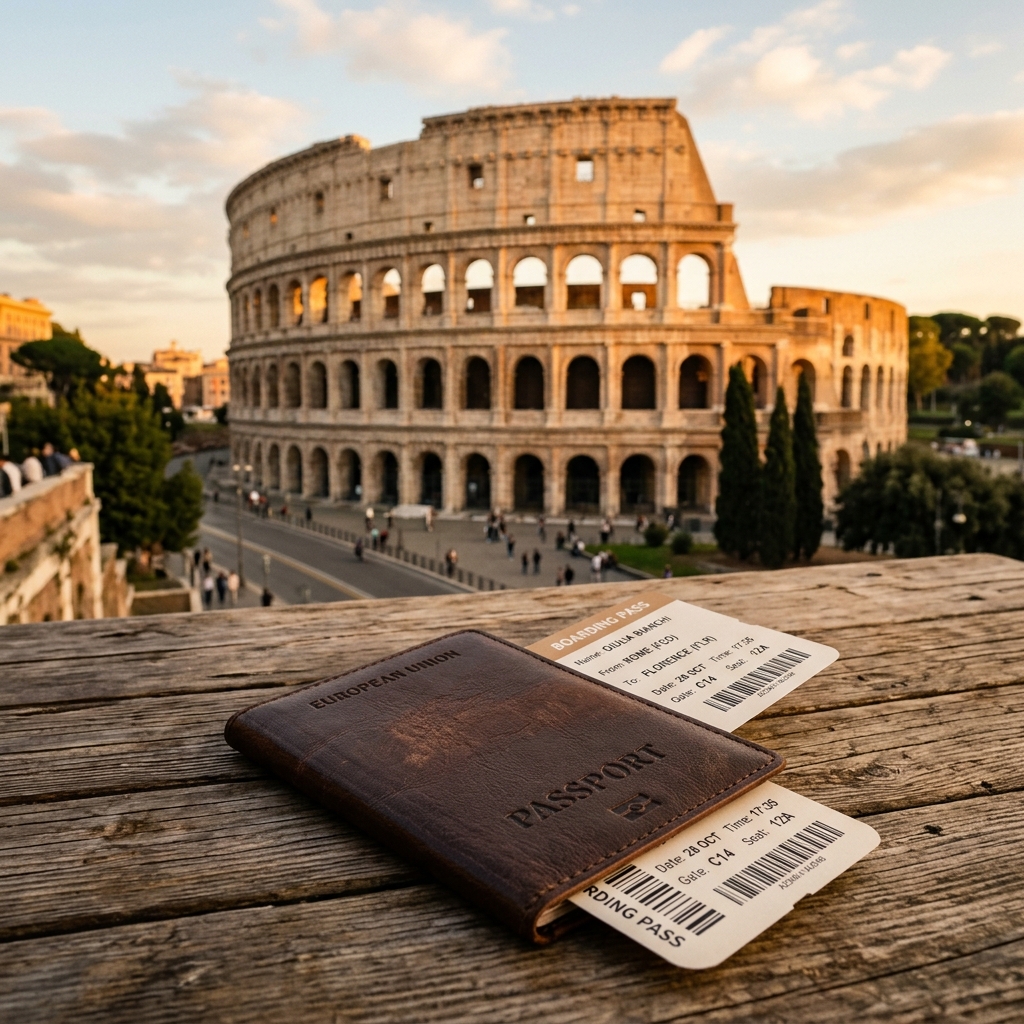
Italy Schengen Visa From the UAE: What Makes Applications Stronger
Italy consistently ranks among the most desired European destinations for residents of the United Arab Emirates. From the architectural grandeur of Rome and the Renaissance treasures of Florence to the coastal magnificence of the Amalfi Coast, the appeal is undeniable. However, the Italian consulate in the UAE operates one of the highest-volume Schengen visa processing centers in the region, and the sheer density of applications creates an environment where only meticulously constructed files succeed. The margin between approval and refusal is often determined not by whether the required documents exist, but by how strategically they are assembled and presented.
The Italian diplomatic missions in Abu Dhabi and Dubai adhere strictly to the unified Schengen visa code while simultaneously applying localized operational nuances that distinguish them from other member state consulates. Understanding these specific expectations, from the granular formatting of bank statements to the precise alignment of multi-city Italian itineraries, is the decisive advantage that separates successful applicants from those who receive the frustrating Article 32 refusal notice.
Estimated Processing Time
The standard processing timeframe for an Italian Schengen visa from the UAE ranges between 10 to 15 calendar days from the date of biometric enrollment. However, during peak travel periods—particularly the months of May through September when European summer tourism surges—this timeline can extend to 30 calendar days or more. The Italian consulate explicitly reserves the right to extend processing to 45 days in exceptional circumstances requiring additional verification. Applicants should initiate the process a minimum of six weeks before their intended departure to accommodate potential delays without jeopardizing confirmed travel arrangements.
Basic Required Documents
Valid passport with at least three months of validity beyond the intended departure from the Schengen Area and a minimum of two blank visa pages.
Valid UAE residency visa with at least three months of validity beyond the planned return date.
Completed and signed Schengen visa application form with no inconsistencies or blank mandatory fields.
Two recent passport-sized photographs conforming strictly to ICAO standards with white background.
Travel medical insurance covering the entire Schengen Area with a minimum coverage of 30,000 EUR including emergency repatriation.
Confirmed round-trip flight reservations clearly showing entry and exit from the Schengen zone.
Comprehensive proof of accommodation for every night of the intended stay, with verifiable booking references.
Original bank statements from the preceding three to six months, stamped by the issuing bank.
Employment verification letter on company letterhead detailing role, salary, tenure, and authorized leave dates.
The Italian Consulate's Focus on Itinerary Logic
The Italian consulate places exceptional emphasis on the internal logic of the submitted travel itinerary. Italy is geographically elongated, and officers are highly attuned to itineraries that propose impossible geographic transitions within compressed timeframes. An application proposing a morning museum visit in Milan followed by an afternoon excursion in Sicily without corresponding internal flight documentation will be flagged as logistically implausible. The itinerary must demonstrate a geographical flow that respects travel distances, includes realistic transit times, and accounts for internal transportation bookings where intercity movement is proposed.
Financial Evidence Standards
The Italian consulate assesses financial viability through the lens of sustainability rather than isolated wealth. The average daily expenditure benchmark applied for Italy is approximately 50 to 70 EUR per day, excluding pre-paid accommodation and flights. Officers calculate whether the applicant's available funds can sustain this level of spending for the declared duration without exhausting their financial reserves. A healthy closing balance that comfortably exceeds the calculated trip cost, supported by consistent monthly salary credits matching the employment letter, forms the baseline requirement. Sudden large deposits within the final statement month are systematically flagged and often result in requests for additional documentation.
Multi-City Italian Itineraries
When planning visits across multiple Italian cities, the supporting documentation must demonstrate meticulous logistical foresight. If the itinerary includes travel from Rome to Venice to Milan, the application should ideally include evidence of pre-booked Trenitalia or Italo high-speed rail tickets, or internal flight reservations. These internal transportation bookings serve dual purposes: they validate the geographic feasibility of the itinerary and demonstrate financial preparedness. An itinerary that shows movement between distant cities without any evidence of how the applicant intends to travel between them invites skepticism about the authenticity of the travel plan.
Accommodation Verification Practices
The Italian consulate actively verifies accommodation reservations. Officers contact hotels and booking platforms to confirm that reservations are genuine, paid, and non-cancelled. Applicants who submit provisional or easily cancellable bookings risk having their file flagged when the hotel reports no financial commitment from the guest. Utilizing reputable booking platforms that provide verifiable confirmation codes and demonstrate at least a partial payment commitment significantly strengthens the accommodation component of the application.
Addressing the Primary Destination Rule
If the trip involves visiting multiple Schengen countries, the applicant must apply through the Italian consulate only if Italy is the primary destination by duration. An itinerary proposing five days in Italy and eight days in France necessitates applying at the French consulate, regardless of whether the flight arrives in Rome. Violations of this jurisdictional rule are one of the most common grounds for immediate rejection, often accompanied by an annotation that complicates future applications across the entire Schengen network.
Strategic Advice for Stronger Approval
To maximize the probability of approval at the Italian consulate, every submitted document must reinforce a singular, coherent story. The employment letter confirms stable income, the bank statements validate that income, the itinerary demonstrates a realistic expenditure pattern, and the cover letter ties everything together into a compelling narrative of temporary leisure travel. For first-time Schengen applicants, demonstrating prior compliant travel to any internationally respected jurisdiction dramatically reduces the risk profile. Applicants with a history of compliant Schengen travel should reference this explicitly in their cover letter, reinforcing their established pattern of compliance.
How Patriot Pro Travel & Tourism Approaches Applications
Risk assessment: We conduct a thorough audit of your profile to identify vulnerabilities before they reach a consular officer.
Profile positioning: We ensure your professional standing and financial footprint are presented in the most compelling light possible.
Document alignment: We cross-verify every certificate, statement, and itinerary to eliminate contradictions that trigger refusals.
Strategy planning: We guide you on the optimal embassy, timeline, and approach tailored to your specific circumstances.
Reducing refusals: By preemptively addressing common consular concerns, we systematically lower the probability of rejection.
Our methodology is built on precision, deep consular insight, and an unwavering commitment to our clients' global mobility. We handle the complexity so you can travel with confidence.